Thursday, 10 February 2011

History of Radio

  • The history of radio started with lots of different people but the most common people are Jagadish Chandra Bose, Guglielmo Marconi , Alexander Stepanvich Popov and Nikola Tesla.
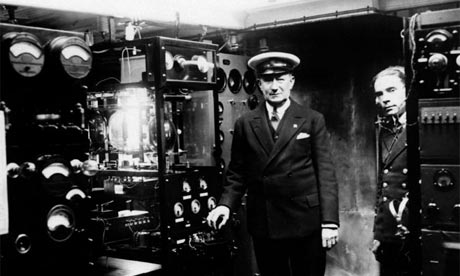
  • the late 19th century was the years were various scientist experimented with wireless communication. this means that various theoretical and experimental led to the development of radio and the communications system today.
  • some early works were done on local effects and experiments of electromagnetic induction.
  • the first radio transmission was done under radio telegraph system, which didn't have audio sound. the first radio station were AM and FM which was aired commercial, public and nonprofit varieties. 

Nikola Tesla
  • In addition Nikola Tesla was the first to develop radio frequencies.
  • in 1891 Nikola Tesla started the research on radio later on the years he published articles and gave lecture on the experiments with alternate currents of high potential and high frequency.
  • in 1893 Nikola Tesla gave a public demonstration of wireless radio communication.
  • after the demonstration Nikola Tesla work was publicized widely, this means that other scientists and inventors began to experiment with Nikola Tesla theory.


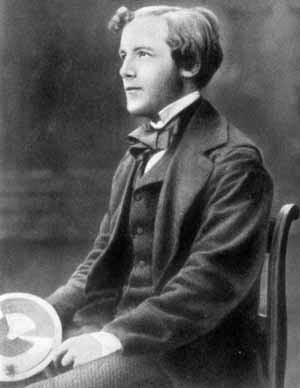
James Clerk Maxwell
  • James Clerk Maxwell developed a set of equations that describes electromagnetic wave. 
  • later on the years James Clerk Maxwell developed his theory by using other works of other scientists  form this James Maxwell invented the existence of electromagnetism.
  • in 1873 James Clerk Maxwell described the theoretical basis of the propagation of electromagnetic waves in his pare to the Royal Society.


20th Century Developments
  • 1954 Regency company introduced a pocket transistor radio (TR-1) which was powered by a 22.5v battery.
  • in the 1960s VOR system was invented but it was wide hit with the aircraft navigation before VOR system aircraft navigation used AM radio stations for navigation.
  • 1960 Sony company introduced the first transistorized radio, it was Small that it could fit in a pocket and it was powered by a small battery.
  • on the twenty years radio technology has been improving more and more this because the technology system are getting more smaller by the minute.
  • later on colour televisions and digital com for example in 1963 : colour television was introduced and the first radio satellite telstar was launched.
  • the late 1960s were the years where digital telephone was invented to make the telephone system in to a digital format.
  • the 1970s : the company LORAN became the hit radio navigation system. later the U.S. Navy started to experiment with satellite navigation.
  • in 1987: the GPS constellation of satellite was introduced.
  • the early 1990s century: amateur radio was researched and experimented on, this means that experimenters used the personal computers to get radio signals.
  • in 1994 the U.S.A army and DARPA launched a big research on constructing software radio that could be used in flying but only changing the software.

21st Century Development
  • in the 21st century Internet radio is the biggest invention of the audio industry. this means that the radio can be heard through a radio-style audio programming with Internet connections, no radio transmitters is used.
  • digital audio broadcasting has became big because DAB has grown to relate to FM radio for other countries.
  • most radio shows can be heard live in the Internet, in cars and other technologies means that radio has improved and became advanced in many ways for example for the early days of the 1870s century radio was being researched but in the 21st century radio is becoming smaller and smaller until we have radio on our hands.

    i have used wikipedia to find the information on history of radio
    http://en.wikipedia.org/wiki/History_of_radio

OFCOM

What is of OFCOM?

OFCOM means The Office Of Communications, it is an independent telecommunications regulator. OFCOM was initially established in the Communications Act 2003.


How does it regulate the radio industry?
  • The current chairwoman of OFCOM is Colette Bow and the chief executive is ED Richards
  • OFCOM had previously been the responsible for five bodies and they are, The Broadcasting Standards Commission, The Independent Television Commission, The Office of Telecommunications( OFTEL) and The Radio Authority and The Radiocommuncations Agency.
  • OFCOM's responsibilities is that they mange and cover all of the industries and processes. OFCOM also have a duty to consider the interests of the citizens and consumers, this is done by promoting competition and protecting consumers from harmful and offensive material. the main areas that OFCOM concentrates is licensing, undertaking research, creating codes and polices , addressing complaints and looking into competition.

Thursday, 3 February 2011

The BBC videos


what I  learnt from the BBC school news report videos is that there are six steps into writing a news report. the six steps are
  1. finding the story 
  2. gathering information 
  3. writing the story 
  4. assembling the news story
  5. ordering stories 
  6. and broadcasting the stories to the nation
BBC News Values 
  • truth and accuracy 
  • impartiality and diverting of opinion 
  • editorial integrity and independence
  • serving the public interest
  • fairness 
  • balancing the right to report with respect for privacy
  • safeguarding children 
  • being accountable to the audience  
the second steps is to use the five Ws and How? when asking or interviewing a person so that the answer is long and has a point. 
  1. what? 
  2. who?
  3. where?
  4. when?
  5. why 
  6. and how? 
we writing the report you have to think about facts and if the facts are building the story, also you have to know the difference between facts and opinions and when interviewing a person you have to think about open questions and also think about extra stuff like photography, extra video, sound affects and background music and graphics 

Top Tips from the BBC video are 

  • think about the 5 Ws
  • plan open questions 
  • balance opinions
  • videos , sounds and graphics  
  • be creative 
  • think about audience 
  • need or want to know  
  • variety 
  • stay alert  
  • check sources  

Thursday, 21 October 2010

Case Study- BBC Radio One

BBC RADIO ONE
  • The comparison between BBC radio one and pulse FM is that both target young audience and both radio station cover the aspects of entertainment news and different range of music. 
  • BBC radio one offers different range of coming music and it also supports emerging artist in the UK, as well as having live misc , news, documentaries and others areas of  young adults.
  • BBC RADIO 1: mostly looks at contemporary news, entertainment, speech and showbiz
  • BBC RADIO 1: is based in London and it has a sister act with BBC 1 Xtra.
  • BBC RADIO 1 : was first broadcasted in 30 September 1967
  • BBC RADIO 1 : has shows on weekdays breakfast, weekday drive time and many other shows including news and weather
  • BBC RADIO 1 would carry Pulse FM newscast because in Pulse FM newscast we have contemporary news, entertainment and speech and showbiz also music.
Pulse FM
  • Pulse FM has similar ideologies and values as BBC RADIO 1 for example local news, gossips about celebs etc
  • Pulse FM engages with a younger audience however it is also open to a wider range of audiences, this is because Pulse FM is not formal, it adds humor
  • the structure of Pulse FM starts of with discussing serious issues such as finance and political issue (current affairs), then it goes into less serious topics such as celeb gossip and music interviews. this is because it gives the audience less stress at the end of the newscast and it entertains the audience int the end.
  • the language of  Pulse FM is less informal because Pulse FM adds humor to the newscast, this means that the audince will be entertainted, although the newscast has serious issues it is more relaxed.   
  • the style and image of Pulse FM is young and cherry because the target audince for Pulse FM is young adults and teenagers, although the newscast deals with serious issues that relate to adults and old people.
Equipments
  • here are some of the equipments that BBC Radio used during the olden time.

    AXBT
    this is the Type A microphone used in 1934-1935 by the BBC Radio


recording  
 this is the Golders Green Hippodrome Studio, this was used  in 1913.


The desk
this the Type D desk used by the BBC Radio


Thursday, 14 October 2010

working in garageband

In todays lesson we explored the software called garageband


I made a song in garageband and learned how to use the software

Thursday, 7 October 2010

How To Analyse The Audience

we talked about how to analyses the audience result and other surveys.

we discussed how to answer these questions
age , gender, interest, education, encomium background, 
how do they use the radio? when?

Monday, 4 October 2010

Analysis of a radio newscast

In this easy I would be looking at a radio newscast and analysing the way the radio newscast is viewed.
The radio newscast was introduced by the news reader saying the time of the radio news show also what radio station the listeners are listening to for example the reader at sesame centre said what time the show was (9.00) and what station the radio programme was on.
Therefore it tells the listeners what programme their listening to also it give the listeners the identity of what name or type of programme it is.

The structure in how the radio news reader, read the news was a serious tone of voice, also the story line in which story was first as headline, because it’s important that the public know this information for example it could be that the parliament stopped tax’s etc.
I believe that the radio station sesames centre read the most serious important news first and the less important news last in order to end the show on happy note; this impacts the listeners because it gets their attention also their interest on the news.
Another structure that the radio station sesames centre had is the connection of going straight in to the story’s other than waiting. The news reader’s tone of voice is strong and serious.
In contrast to the radio station there is no background music or sound effects, the only source of sound is the different type of voices for interviews.
This tells us that radio newscast often refer to using music, unless it’s a celebrity’s new song or a new movie trailers.

The radio station have to think about what type of story’s would people want to listen to, in this case the news readers have to think about the news valves, for example simpliciity, human interest, threshold etc.
The radio station sesames centre used the news valves because the story’s related to the valves of human interest, simpliciity and threshold.
This gives the news readers the idea of garbing the listener’s attention and knowing what listeners would like to hear.

Another point that the radio newscast has to think about is the audience, so in other words what type of gender is it target for, for example it’s only female, is it only for adults etc. The radio station sesames centre targeted the audience of adults because its news story’s related to adult issues.
I know this because when the news reader read the news also that tone of voice used by the reader for example if the news was for teenagers it would be musical and entertaining, rather than boring adult voices, also in adult news they use a lot of silence to make it important and concerning

In conclusion looking at the research I believe that radio station sesames centre used the importance of news valves also its structure is strong because they know who their target audience is also they can relate to the listeners.